07.10.2026

Sarajevo is best read on foot, and then it opens toward the hills. In one day you can cross the stone bazaar, drink coffee from a copper tray and take the tram out to the source of the river. The next day belongs to the mountain. Trebević sits above the roofs. Bjelašnica and Jahorina ask for more time. Lukomir is a village at the end of the road, not a stop of half an hour. This guide stays with places people actually visit. There are no invented addresses and no order you are required to follow.
The city lies in the Miljacka valley. The old part is dense. The newer part climbs the slopes. It makes sense to stay down first, among the shops and courtyards, and only then go up. In winter the mountains are white and the bazaar feels shorter. In spring and autumn the walk lasts longer. In summer Ilidža and the springs are sought for the shade. None of this replaces a map. On BiHMap the firms of Sarajevo sit on the city map, from cafés to pharmacies.

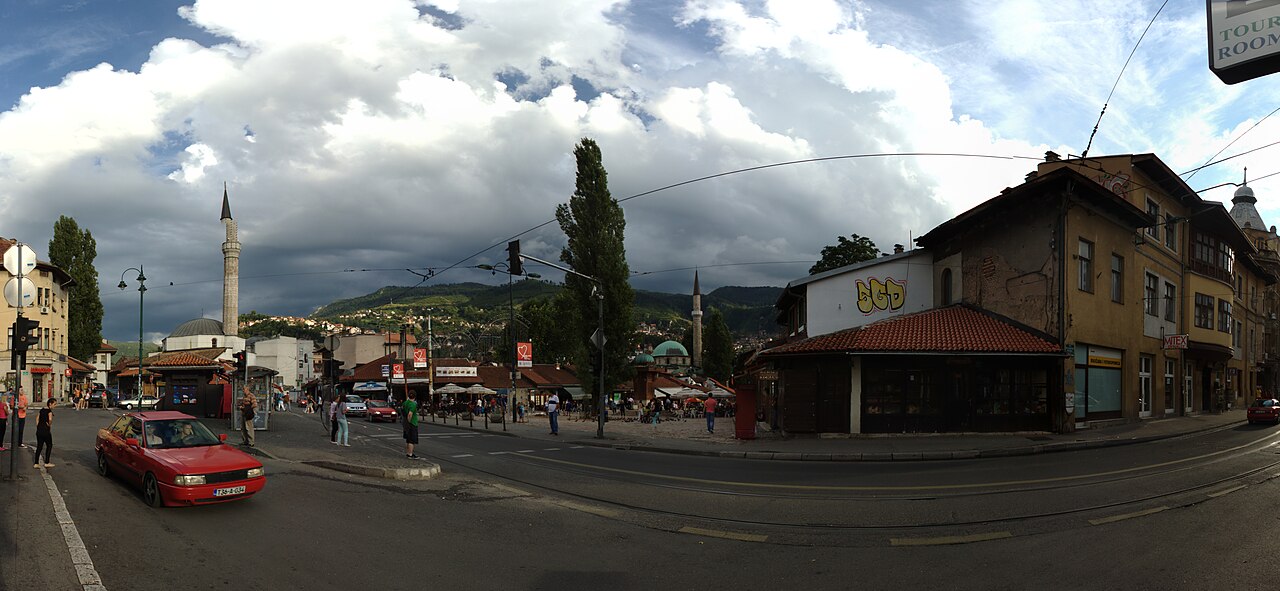
Baščaršija is the old trading quarter, not a stage set. Coppersmiths, carpets, coffee and quince sweet still stand side by side. The Sebil is the centre from which the streets run out, and Kazandžiluk keeps the sound of hammers on copper. The Gazi Husrev-beg Mosque, the clock tower and the courtyards around them give the bazaar a rhythm that is more than a row of shops. Come in the morning if you want to see the stalls open, or late in the afternoon when the stone cools and the coffeehouses fill.
There is no need to rush from one gate to the next. A side street often says more than the main passage. If you are looking for a place to eat or drink coffee, look at the firms in the directory, not only the first table on the square. The bazaar is small, so it is easy to come back the next day for what you skipped the first time.
Vrelo Bosne is in Ilidža, at the western end of the Sarajevo valley. The River Bosna rises here, in a park of avenues, ducks and small wooden bridges. The walk is flat, so it suits people who do not want a climb. Horse carriages still run along the main avenue. It is a slower outing than the bazaar and a good second half of the day, especially in summer when the city is hot.
Ilidža is not only the park. Around it are neighbourhoods, hotels and firms that work for guests and for the neighbours. If you stay longer, come back toward the city along the water, not only by the same road to the first stop. The water here is the reason for the visit, not an extra.
Trebević stands over Sarajevo like a wall. The cable car lifts a passenger from the city to the ridge, and the view turns back onto the valley, the roofs and the lines of the streets. You do not need to be a mountaineer to go up. The paths around the upper station are enough for an hour of walking. On a clear day you see how narrow the city really is, pressed between the slopes.
In winter the wind on the top is sharper than in Baščaršija, so a jacket is not wasted even when it is mild below. In summer the ridge is an escape from the heat. If the cable car is not running, do not invent another entrance. Ask on the spot, because the timetable changes.
Skakavac is a waterfall north of the city, in the forest above Nahorevo and the slopes around it. The path leads through beech to the place where the water falls from a high rock. This is not a walk on cobbles. Shoes need to hold mud, and the air in the forest is colder than on the square. The waterfall is a reason to leave the bazaar at least once.
After rain the path is slippery and the stream is louder. In a dry summer the leaves are green and thick. Do not plan Skakavac and Jahorina on the same day. One is forest to the north. The other is a ski mountain to the east.
Bjelašnica is an Olympic mountain from 1984. In winter people ski. In summer they walk between villages and pastures. The wind on the plateau is strong even when the city is quiet. The villages on the slopes are not backdrops for a photograph. People still live in them, cut hay and keep animals. Respect for a courtyard is not a slogan here.
A day on Bjelašnica needs an early start if you want both the height and a return in daylight. Fog can sit on the plateau and hide the road while Sarajevo below is in sun. A plan for June is not a plan for February.
Jahorina lies east of Sarajevo. In winter it is a ski resort. In summer it is a green slope with a view toward Romanija. The paths are more arranged than the village tracks on Bjelašnica, so the outing is simpler if your aim is a walk and a meal rather than a long climb. Here too the weather on top is not the weather in the bazaar.
If you choose one mountain, Jahorina is the easier start and Bjelašnica is the wider landscape. Both deserve a full day. Joining either of them to Baščaršija on the same afternoon leaves both unfinished.
Lukomir is a stone village high on Bjelašnica, one of the highest inhabited villages in the country. The houses are low, the roofs are steep, and the road to it is not a city street. In winter it is cut off. In summer and early autumn you arrive slowly, stay briefly and do not step into someone else's yard. The village is not an open-air museum.
If this is your first trip out of Sarajevo, leave Lukomir for a day when you already know what a mountain road looks like. The beauty is in the quiet and the stone, not in a crowd. On the way back the city opens again in the valley, and only then do you see how small the bazaar is against the hills above it.
Sarajevo is not used up in one weekend. The bazaar, the spring and one mountain already make an honest day. The firms, cafés and services beside those places stay in the directory, on the map, and not in this text as an advertisement without an address.